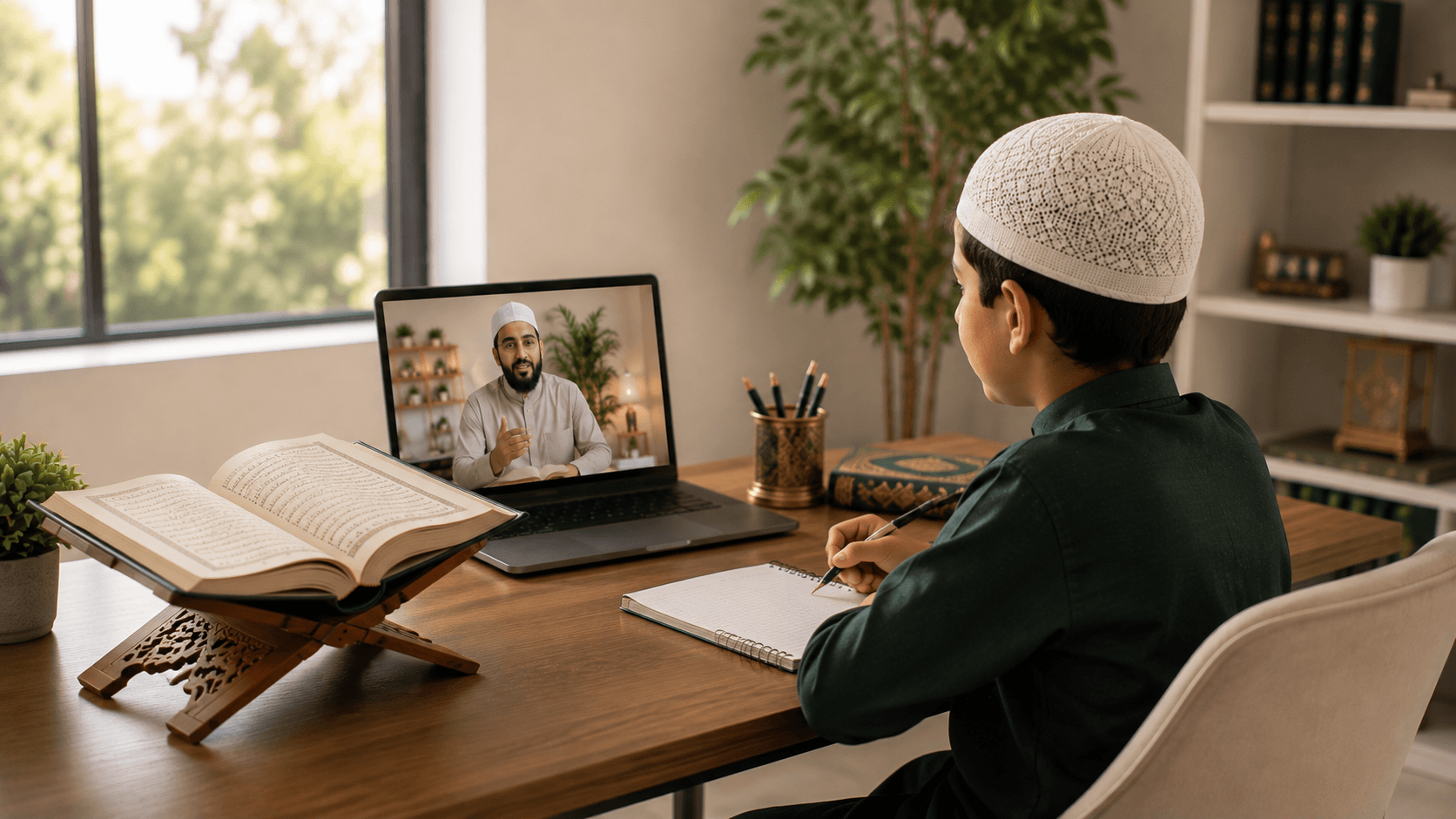
The Modern Evolution of Global Quranic Distance Learning
For centuries, seeking authentic Quranic education required physical travel to community mosques, traditional kuttabs, or residential madrasas. For Muslim families living in Western suburban communities or regions without nearby qualified instructors, finding qualified teachers has historically been a significant logistical challenge involving long commutes, rigid timetables, and limited instructor options.
Modern digital infrastructure has transformed Quranic accessibility. High-speed internet, interactive digital whiteboards, and high-definition audio software now connect families directly with qualified, native Arabic and Quranic tutors across global time zones from the comfort, safety, and convenience of home.
Comparative Analysis: Online Classes vs. Traditional Weekend Madrasas
Evaluating instructional models reveals key pedagogical differences between physical weekend schools and structured online private learning:
1. Active Recitation Time: Weekend schools allocate approximately 3–5 minutes of individual recitation per pupil within large classrooms. Online 1-on-1 instruction provides 30–45 minutes of continuous, dedicated recitation every session. 2. Scheduling Convenience: Physical madrasas require weekend family commutes and rigid schedules. Online classes operate 24 hours a day, 7 days a week, fitting seamlessly into busy weekday mornings or evenings. 3. Instructor Caliber and Matching: Local institutions have limited staff choices. Online academies offer access to a diverse faculty of qualified teachers, allowing exact matching based on age, gender preference, language fluency, and specialized pedagogical training. 4. Comfort and Supervision: Parents can observe lessons directly from their own living rooms, ensuring complete peace of mind regarding pedagogical quality, student safety, and emotional encouragement.
The Technology Infrastructure Behind Effective Virtual Quran Lessons
Effective online Quran instruction requires more than a simple video call. Our custom digital classroom setup includes synchronized digital Mushaf pages that both student and tutor view simultaneously. Tutors use color-coded annotation pens to circle articulation letters, draw arrows for tongue position, and highlight vowel markings in real time.
Integrated two-way audio allows tutors to catch subtle phonological nuances such as improper throat constriction on the letter Ayn (ع) or premature release on Qalqalah letters. Homework assignments and tutor voice recordings are uploaded to a private student dashboard, facilitating effortless home practice.
Building Long-Term Consistency in Virtual Religious Education
The single most decisive factor in Quranic reading fluency and memorization is regular, distributed practice rather than sporadic, marathon weekend study sessions. Thirty minutes of focused instruction three times per week produces dramatically superior retention and vocal muscle development compared to a single two-hour weekend lecture.
Our online academy supports this habit formation through predictable weekly schedules, automated WhatsApp lesson reminders, and monthly milestone certificates that celebrate student perseverance.
A Step-by-Step Blueprint for Creating an Optimal Online Learning Environment
To extract maximum benefit from live online Quran lessons, setting up a quiet, distraction-free environment is essential. We recommend choosing a well-lit room away from television noise, family conversations, and kitchen activity. Using a reliable over-ear headset with a built-in noise-canceling microphone significantly improves audio clarity, enabling your tutor to hear subtle breath releases, tongue placements, and vowel durations.
Arriving at the digital classroom two minutes before your scheduled start time allows you to test audio settings, open your digital Mushaf, and begin with a calm, centered, and spiritually receptive state of mind.