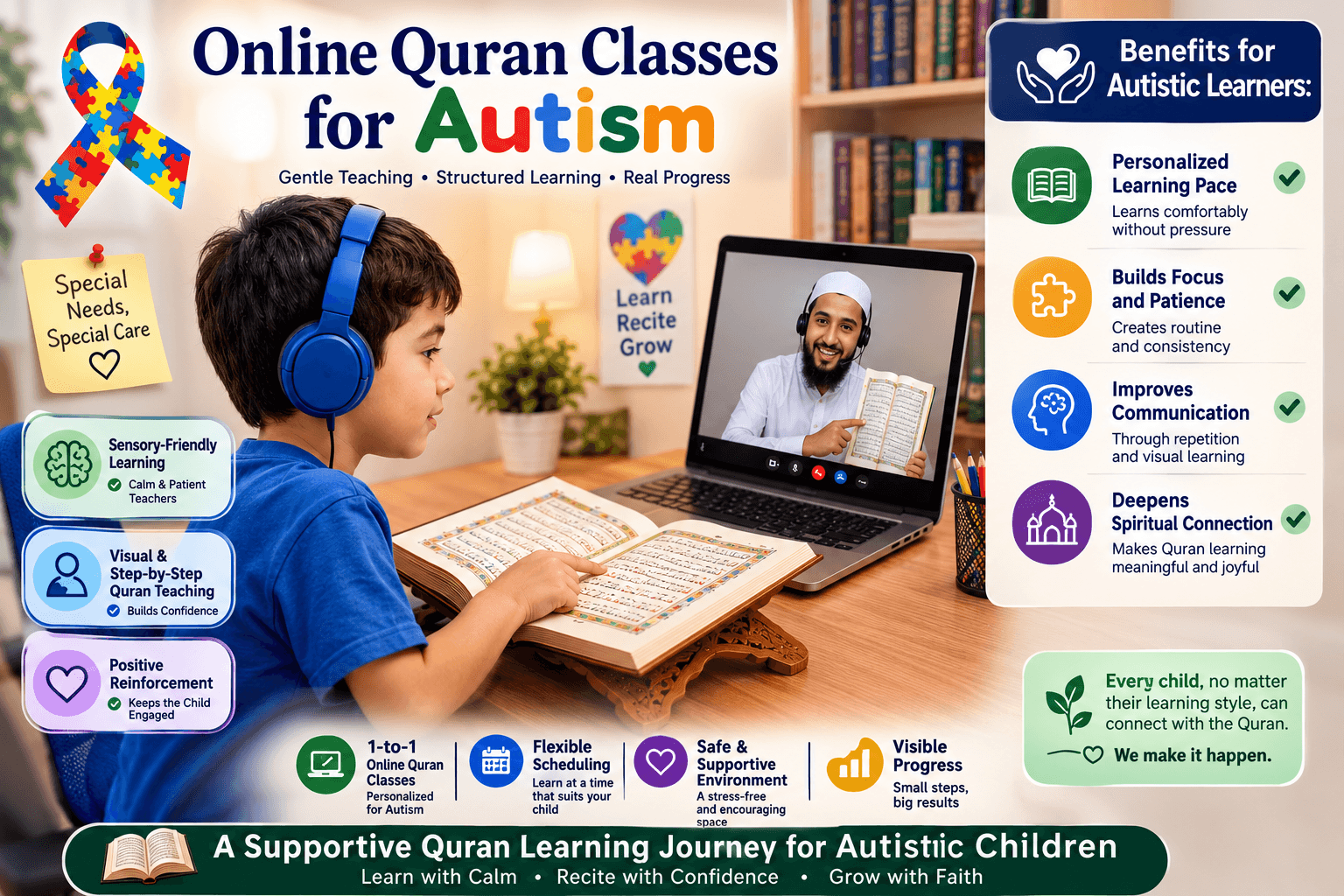
A Predictable, Sensory-Safe Sanctuary for Autistic Learners
Autistic individuals perceive, process, and engage with their environment in unique and diverse ways. Many autistic learners thrive with clear visual structures, explicit logical rules, and predictable routines, while experiencing heightened sensitivity to sensory inputs like bright lights, sudden loud noises, or unpredictable social expectations.
The QuranMethod Autism-Adapted Quran Program is engineered to provide a tranquil, predictable, and sensory-friendly learning sanctuary. We recognize and honor autistic communication styles, structuring lessons with clear visual schedules, consistent tutor interaction, and gentle pacing that respects each student's comfort zone.
Core Methodological Framework for Autistic Students
Our specialized teaching approach incorporates key pedagogical adaptations:
1. Visual First Sequencing: Using visual schedule cards displayed on screen, showing the exact sequence of lesson activities from start to finish so the student always knows what to expect next. 2. Sensory-Gentle Audio & Visuals: Tutors speak with calm, even, soothing vocal cadence, avoiding sudden volume changes or overwhelming visual animations. 3. Literal, Concrete Communication: Instructions are direct, unambiguous, and concise, avoiding confusing metaphors, social idioms, or multi-part verbal demands. 4. Special Interest Integration: Incorporating the student's favorite topics (such as counting, nature, patterns, or architecture) into Quranic examples and reward charts to foster intrinsic engagement. 5. Flexible Response Modalities: Accommodating non-speaking or selectively verbal learners through digital pointer selection, tablet typing, or AAC communication tools.
The Soothing Power of Quranic Cadence and Rhythm
Many autistic individuals respond exceptionally well to the rhythmic, acoustic, and mathematical patterns inherent in classical Quranic recitation. The predictable phonetic structures of Tajweed—such as measured two-count elongations and balanced pauses—often provide a calming, regulating sensory experience.
Our instructors emphasize this soothing melodic flow, helping students experience recitation as a source of emotional regulation, peace, and spiritual comfort.
Caregiver Collaboration and Environmental Control
We work closely with parents to fine-tune the classroom setup. Lessons can be scheduled during times of day when the student is most regulated, with webcams turned off if visual eye-contact causes social anxiety or fatigue.
Parents receive detailed lesson notes outlining exact progress markers, allowing for consistent reinforcement in a relaxed, familiar home setting.
Transition Protocols and Sensory Decompression Time
Sudden transitions between daily activities and structured screen time can provoke anxiety for autistic learners. Tutors establish a two-minute pre-lesson buffer with gentle auditory greetings and quiet screen sharing of peaceful Islamic geometric art, allowing the student to transition smoothly into a calm, focused mindset before beginning recitation.