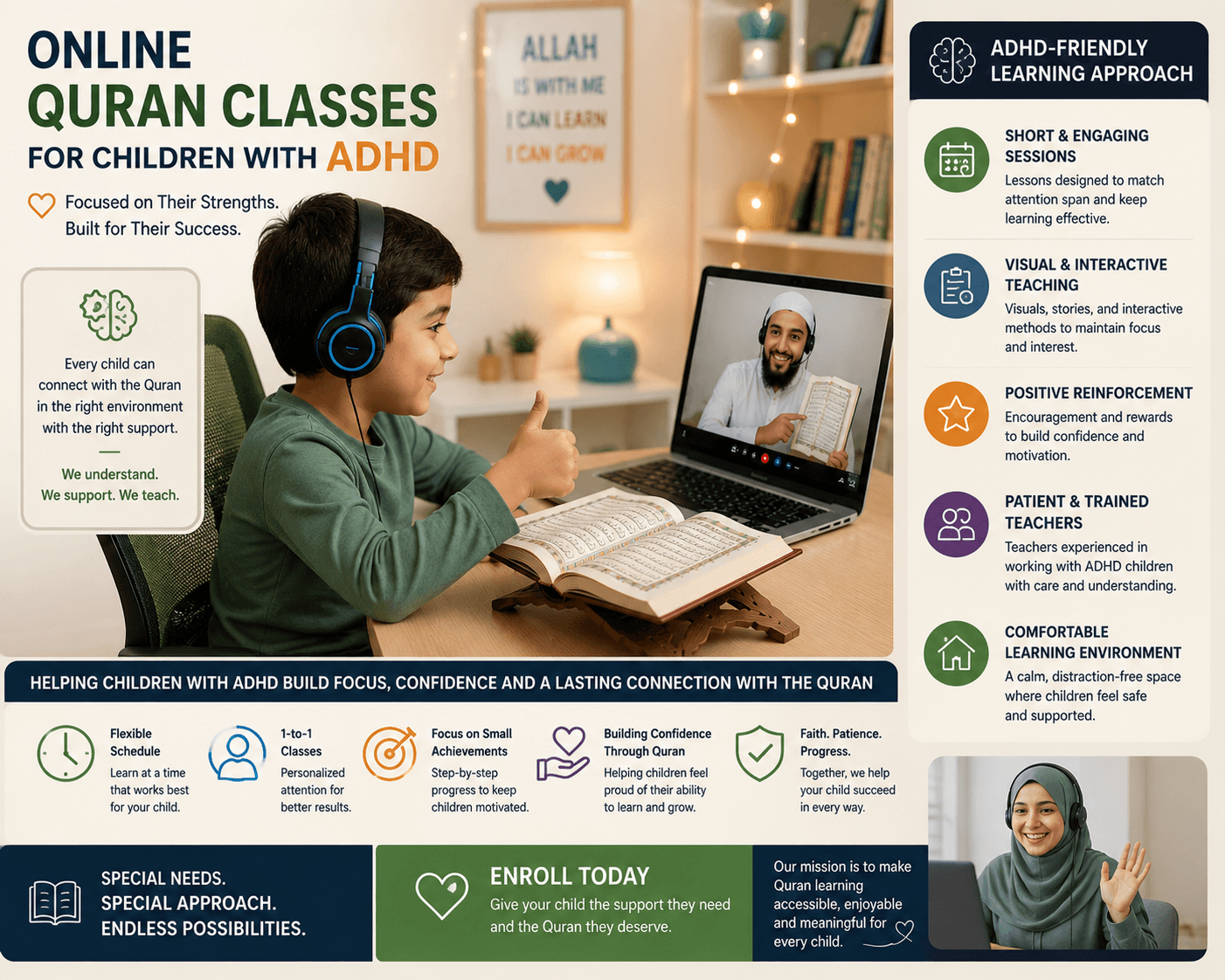
Understanding the ADHD Mind in the Context of Quran Learning
Attention Deficit Hyperactivity Disorder (ADHD) is characterized by neurodivergent executive functioning patterns that affect sustained attention, working memory, impulse regulation, and sensory processing. When placed in traditional, static classrooms requiring long periods of motionless sitting and passive listening, children and adults with ADHD often struggle intensely—not from lack of desire or capability, but because the environment conflicts with their cognitive wiring.
Individuals with ADHD frequently possess exceptional energy, creative pattern recognition, and the capacity for profound hyper-focus when engaged through stimulating, interactive, and encouraging methods. Our ADHD-adapted Quran program channels this vitality constructively through dynamic, multi-sensory, and interest-driven learning techniques.
Key Pedagogical Strategies Tailored for ADHD Learners
Our educators employ evidence-informed educational strategies designed to support ADHD students:
• Micro-Sprint Learning Cycles: Dividing each session into rapid 5-to-7 minute interactive bursts—alternating between phonetic reading, digital screen tracing, rhythmic echo drills, and brief movement breaks. • Visual Anchor System: Using high-contrast digital highlighting, color-coded vowels, and interactive pointer pens to keep visual attention anchored on the specific word being recited. • Immediate Positive Feedback: Providing instant, enthusiastic reinforcement for focused efforts, replacing delayed rewards with immediate digital badges and verbal praise. • Multisensory Auditory Anchoring: Utilizing melodic rhythm and clapping patterns to engage auditory and kinesthetic memory pathways simultaneously. • Zero-Shame Distraction Management: When attention drifts, tutors gently redirect focus using curiosity-driven questions or brief interactive games, completely avoiding reprimands, sighs, or expressions of impatience.
The Importance of a Sensory-Aware Home Learning Setup
Creating an optimal physical study environment at home significantly enhances focus for ADHD students. We advise parents to position the computer screen facing a blank wall rather than a window or high-traffic hallway.
Providing a fidget tool, a balance cushion, or allowing the student to stand while reciting can help discharge physical restlessness without interrupting learning. Over-ear noise-canceling headphones help block peripheral household noise, creating an immersive auditory cocoon.
Transforming Frustration into Enduring Confidence
Many children with ADHD arrive at QuranMethod after experiencing negative feedback or disciplinary scolding in traditional weekend madrasas, leading to low self-esteem and resistance toward religious education.
Our instructors make it their primary mission to rebuild that confidence. By celebrating small, tangible wins—such as reading a line smoothly or remembering a tricky letter—students rediscover pride in their abilities and form a joyful, confident bond with the Quran.