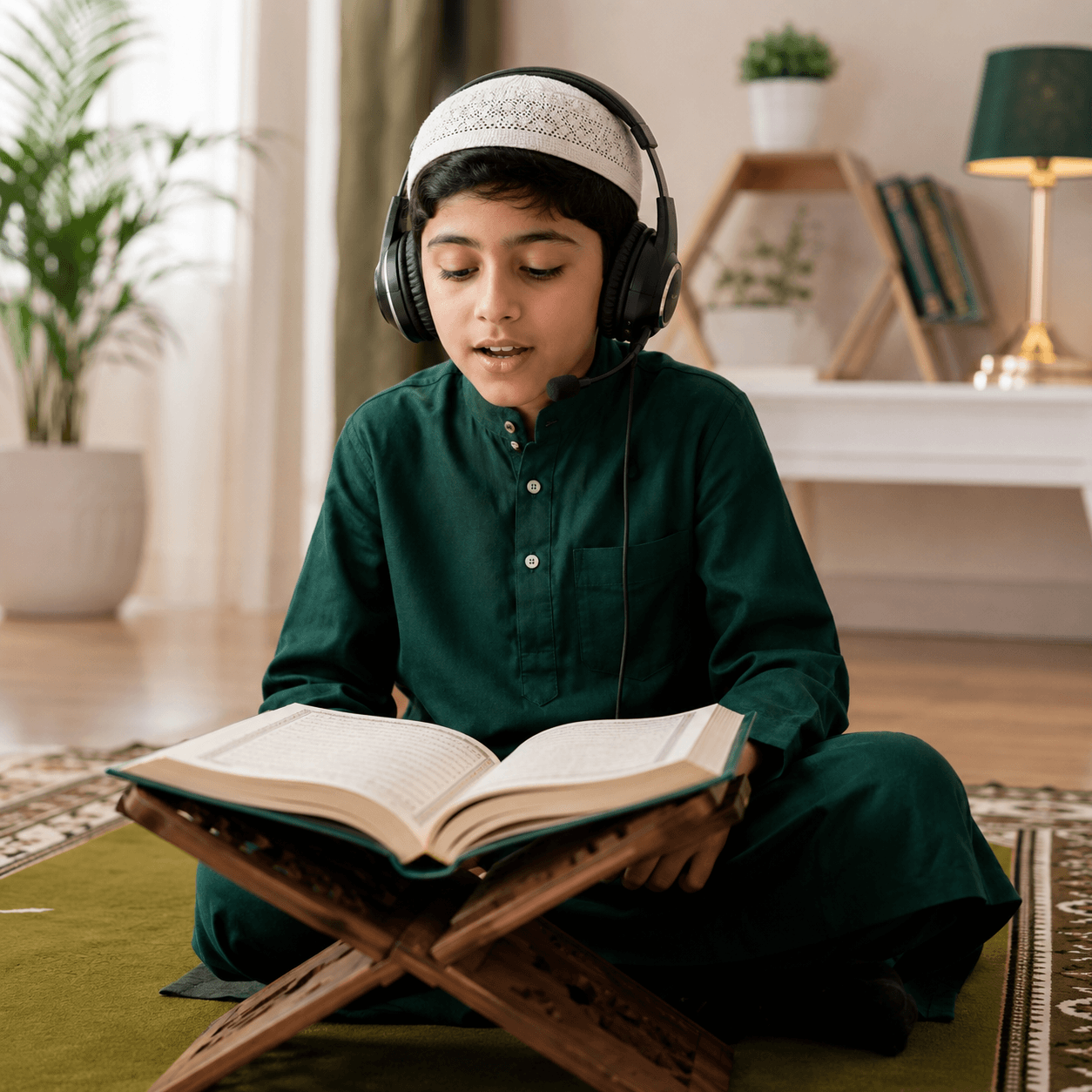
Elevating Reading into Soul-Stirring Recitation (Tarteel)
There is a profound distinction between merely reading the text of the Holy Quran and truly reciting it with Tarteel. Reading is the mechanical identification of letters and words; recitation is an act of deep spiritual presence, acoustic beauty, controlled rhythm, and emotional connection.
In Surah Al-Muzzammil (73:4), Allah commands: "And recite the Quran with measured, rhythmic recitation (Tarteel)." Our Quran Recitation track is designed for students who can already read the Arabic script and now wish to refine their vocal delivery, master breath control, observe stopping rules, and beautify their recitation according to authentic Prophetic tradition.
The Essential Elements of Beautiful and Accurate Tilawah
Mastering dignified Quranic recitation requires synchronizing multiple physical and acoustic techniques:
1. Measured Cadence (Tahqeeq & Tarteel): Reciting at a calm, deliberate tempo that allows every consonant and vowel to receive its full phonetic rights without rushing or sluggishness. 2. Diaphragmatic Breath Management: Learning how to inhale deeply, regulate airflow, and pace long verses to avoid running out of breath mid-sentence. 3. The Science of Stopping and Starting (Waqf & Ibtida): Understanding where it is permissible, obligatory, or prohibited to pause, ensuring that sentence meaning is preserved and never distorted. 4. Natural Vocal Resonance: Finding one's natural vocal range without straining, artificial imitation, or theatrical embellishment, focusing on sincerity and acoustic purity.
Understanding the Rules of Waqf (Stopping Conventions)
A critical component of advanced recitation is the system of stopping symbols indicated in standard Mushaf editions. Pausing at the wrong word can dramatically alter the theological meaning of a verse.
Our instructors teach students to recognize and navigate the primary stopping indicators: Meem (mandatory stop), Laa (do not stop), Jeem (permissible stop), Qali (stopping is preferable), and Sali (continuing is preferable). Understanding these markers transforms hesitant reading into confident, scholar-approved recitation.
Spiritual Mindfulness (Khushoo') During Daily Recitation
The ultimate purpose of beautifying recitation is not artistic performance, but spiritual impact on the reciter's heart. When verses of mercy are recited with gentleness and verses of divine warning with reverence, recitation becomes a direct conversation with Allah.
Our instructors integrate brief thematic reflections into recitation sessions, helping students connect the emotional tone of their voice with the meaning of the sacred text.
Vocal Health and Stamina for Extended Quranic Recitation
Reciting the Holy Quran for extended periods—such as during the month of Ramadan or daily morning Tilawah—demands proper vocal technique to avoid strain and hoarseness. Tutors instruct students in gentle diaphragmatic breathing, ensuring that sound is supported from the lower abdomen rather than forced from the vocal cords.
Staying well-hydrated, avoiding cold drinks immediately before recitation, and warming up with gentle low-register reading protects the throat and preserves vocal resonance for a lifetime of beautiful recitation.
Overcoming Common Recitation Hesitations During Public and Family Prayers
Leading family members in prayer or reciting aloud in the presence of others often triggers vocal nervousness, causing breathlessness, tremors, or forgotten verses. Our tutors conduct supportive mock prayer sessions where students practice leading recitation under simulated conditions.
Learning to anchor the voice with deep breathing and maintain a steady, unhurried cadence dissolves performance anxiety, allowing students to lead Salah with dignity, clarity, and spiritual tranquility.