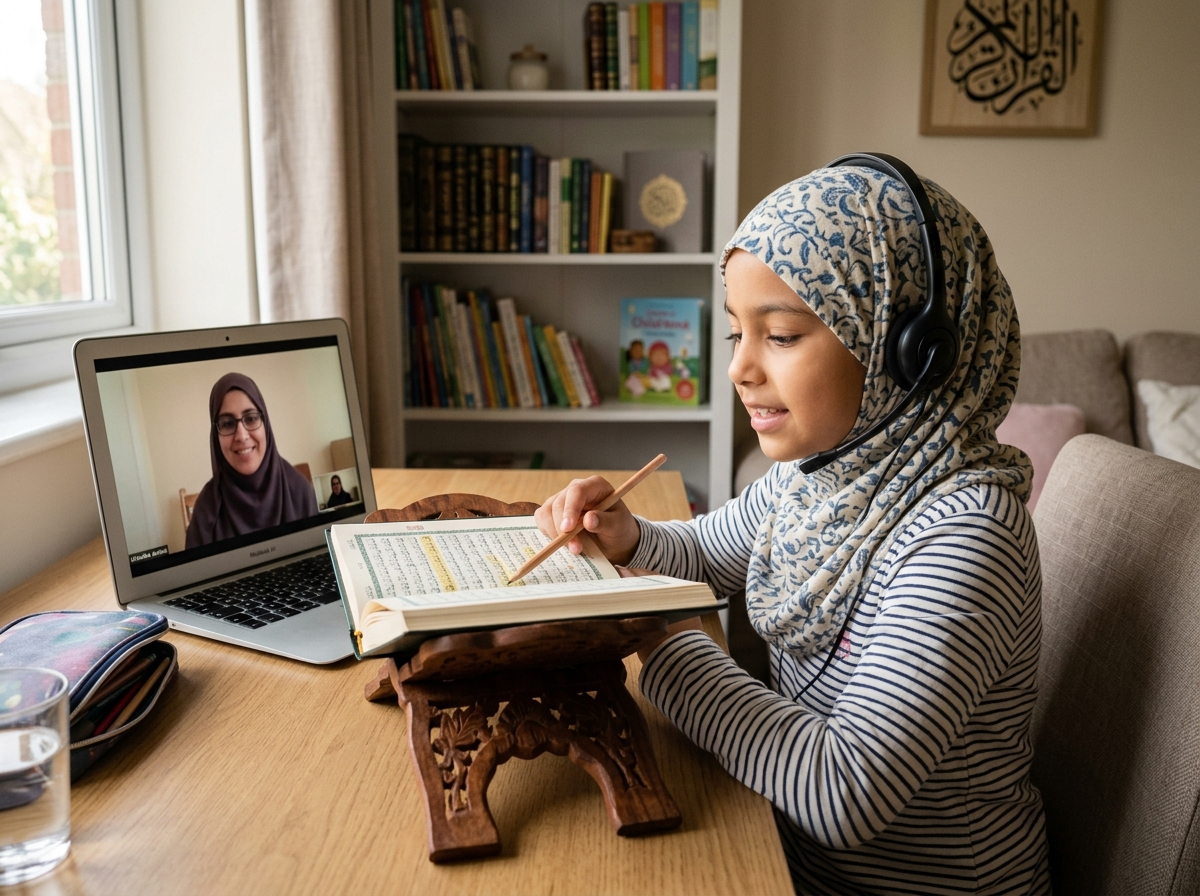
Embracing Neurodiversity in Sacred Quranic Education
For parents of children with Attention Deficit Hyperactivity Disorder (ADHD), Autism, sensory sensitivities, or developmental learning differences, finding a welcoming, supportive Quranic learning environment can be an exhausting journey. In traditional community madrasas, children who struggle to sit still, process multi-step auditory commands, or maintain extended eye contact are all too often labeled as "disruptive" or "unmotivated."
This heartbreaking dynamic causes many neurodivergent children to develop anxiety, resistance, and feelings of inadequacy around religious education. At QuranMethod, we believe with deep conviction that every learner is a cherished blessing from Allah, and that sacred education must adapt with compassion to honor each individual's unique cognitive profile.
Understanding ADHD and Autism Learning Patterns in Islamic Education
Neurodivergent learners possess unique neurological strengths and challenges that require specialized pedagogical understanding:
• Executive Functioning and Focus: Children with ADHD have fluctuating dopamine regulation, meaning they struggle with passive, repetitive rote tasks but exhibit incredible focus when learning is interactive, fast-paced, and gamified. • Sensory Sensitivities: Autistic learners may experience severe discomfort from bright fluorescent lighting, sudden noises, or crowded social settings, making quiet home environments vastly superior for learning. • Working Memory Constraints: Processing multiple phonological rules simultaneously can cause cognitive overload; breaking lessons into single micro-tasks allows for steady mastery without overwhelm.
Evidence-Informed Strategies That Transform Quranic Learning
Our educators utilize several practical pedagogical adaptations:
1. The 5-Minute Micro-Cycle: Alternating between active recitation, screen-tracing games, rhythmic clapping, and brief physical stretching breaks every five minutes. 2. High-Contrast Visual Highlighting: Using bright digital colored pens to draw the student's visual focus directly to the specific letter or vowel being recited, eliminating visual overwhelm. 3. Motion-Friendly Learning: Allowing students to use fidget toys, sit on balance balls, or stand and pace while reciting. Movement helps regulate focus for ADHD minds. 4. Clear Visual Schedules: Displaying a simple visual task checklist on screen (e.g., "1. Dua -> 2. Review 3 lines -> 3. New letter -> 4. Prophet story -> 5. Gold Star"), providing comforting predictability. 5. Radical Positive Encouragement: Celebrating small efforts with immediate digital badges and verbal praise, actively rebuilding damaged self-confidence.
Creating a Sensory-Friendly Home Study Sanctuary
Parents can dramatically improve their child's focus by making minor environmental adjustments: positioning the desk away from busy household hallways, using warm indirect lighting, equipping the child with comfortable over-ear noise-canceling headphones, and keeping review sessions short (5 to 10 minutes) and joyful.
A Message of Hope and Comfort for Muslim Parents
Your child's unique neurological wiring is not a flaw or a spiritual deficit; it is an intentional creation of Allah. With patient mentorship, tailored educational methods, and unconditional love, neurodivergent children frequently develop profound, beautiful connections with the Holy Quran that bring peace, pride, and blessing to the entire household.
Practical Strategies for Overcoming Working Memory Deficits in Reading
Many neurodivergent learners experience challenges with working memory, meaning they may remember the sound of a letter on its own, but struggle to hold three letters in mind simultaneously when blending a full word.
To support working memory, our educators use "sliding cover" techniques: covering the later letters of a word with a digital card and revealing them one syllable at a time. This reduces visual overwhelm, allowing the student to process each sound sequentially without feeling intimidated by long Arabic words.
Fostering a Culture of Patience and Divine Acceptance in the Home
Parenting a child with special needs requires immense emotional endurance. When progress feels slow, remember that in the sight of Allah, sincere effort and patient perseverance are valued infinitely higher than speed.
Your child's unique relationship with the Holy Quran is a source of divine blessing and barakah for your entire family. By providing gentle, adaptive, and loving support, you are fulfilling one of the most noble obligations of Islamic parenthood.
Assistive Educational Apps and Digital Whiteboard Tools
Technology provides incredible assistive scaffolding for neurodivergent learners. In our virtual classrooms, tutors utilize interactive letter-matching software, digital sand trays for tactile letter tracing, and color-coded digital highlighters that isolate individual syllables.
These visual tools reduce executive processing strain, allowing children with ADHD or processing delays to engage directly with phonetic sounds without feeling cognitively overwhelmed.
Collaborating with Educators to Build Confidence
When parents, tutors, and students operate as a unified, supportive team, breakthroughs happen. Open communication ensures that tutors adapt quickly to changes in medication schedules, school fatigue, or sensory sensitivities, keeping the Quran classroom a place of unconditional safety, encouragement, and spiritual flourishing.
Individualized Sensory Decompression Strategies
When a neurodivergent child shows early signs of cognitive overload—such as blinking, fidgeting, or verbal withdrawal—our trained tutors seamlessly shift from reading drills to soothing auditory recitation playback, giving the child space to reset without feeling pressured or judged.
Collaborating with Educational Specialists
We encourage parents to share insights from their child's occupational or speech therapists. Our tutors readily incorporate recommended visual schedules and sensory cues, ensuring seamless continuity between secular and religious educational routines.
Long-Term Spiritual Flourishing and Family Support
When neurodivergent children feel understood, valued, and successful in their Quran studies, the positive effects radiate across their entire lives. They build resilience, form positive associations with Islamic identity, and develop genuine, heartfelt pride in their accomplishments.